
 Shop By Category
No products in the cart.

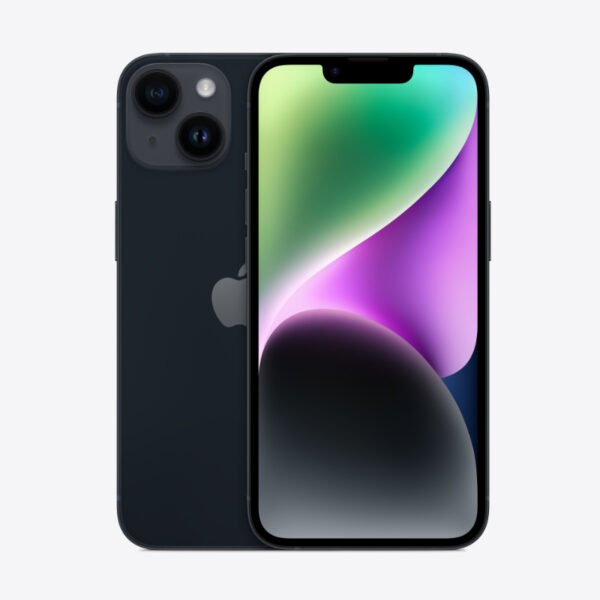


Apple Iphone 14 REFURBISHED.
- Dual Sim, 3G, 4G, 5G, VoLTE, Wi-Fi, NFC
- Bionic A15, Hexa Core, 3.22 GHz Processor
- 6 GB RAM,
- 128 GB/256 GB inbuilt
- 3279 mAh Battery with Fast Charging
- 6.1 inches, 1170 x 2532 px Display with Small Notch
- 12 MP + 12 MP Dual Rear & 12 MP Front Camera
- Memory Card Not Supported
- iOS v16
THIS PRODUCT IS NOT UNDER WARRANTY AS ITS A REFURBISHED PHONE. Price range: KSh 58,500.00 through KSh 62,500.00
Apple Iphone 14 REFURBISHED.
Price range: KSh 58,500.00 through KSh 62,500.00
Description
Screen Technology and Size
IPHONE 14 features a stunning 6.1-inch Super Retina XDR display that uses OLED technology, delivering true blacks, vibrant colors, and impressive contrast. With a resolution of 2532 x 1170 pixels and a pixel density of around 460 ppi (pixels per inch), it offers a sharp and detailed viewing experience. Brightness and Picture Quality It supports HDR (High Dynamic Range) content through technologies like HDR10 and Dolby Vision, providing a wider range of colors and brightness. The display can reach up to 800 nits of typical maximum brightness and peaks at 1200 nits for HDR content, ensuring you can see everything clearly, even in bright sunlight. Plus, it features True Tone technology, which automatically adjusts the display’s color and intensity based on the surrounding light. Design and Protection The screen is safeguarded by a Ceramic Shield front cover, which Apple claims is tougher than any other smartphone glass out there. The display has rounded corners that follow a sleek, curved design, and it keeps the classic notch at the top for the front camera and Face ID sensors, setting it apart from the “Pro” models that have the Dynamic Island. Refresh Rate Unlike the “Pro” models, the standard iPhone 14 display has a refresh rate of 60Hz, meaning it refreshes the image on the screen 60 times per second. It doesn’t come with the ProMotion technology that allows for adaptive refresh rates up to 120Hz, which you’ll find on the iPhone 14 Pro model.
PROCESSOR
The base iPhone 14 and the iPhone 14 Plus are both equipped with the Apple A15 Bionic chip, which represents a significant change in Apple’s approach. Traditionally, every new flagship iPhone in a generation would come with the latest chip, but this time, the A15 Bionic found in the iPhone 14 models is the more robust version that was previously featured in the iPhone 13 Pro series. It boasts a 6-core CPU, consisting of 2 high-performance “Avalanche” cores and 4 high-efficiency “Blizzard” cores, along with a 5-core GPU. This upgrade over the A15 Bionic in the standard iPhone 13 models, which had only a 4-core GPU, gives the iPhone 14 a noticeable edge in graphics-heavy tasks. Additionally, the A15 Bionic chip comes with a 16-core Neural Engine, which plays a vital role in speeding up machine learning and AI tasks. This enables impressive features like advanced computational photography (thanks to the Photonic Engine) and enhanced on-device processing. While it may not be the absolute latest chip in the iPhone 14 lineup—since the Pro models feature the A16 Bionic—the A15 Bionic is still a remarkably powerful and efficient system-on-a-chip. Built on a 5nm process, it ensures quick performance, smooth multitasking, and ongoing support for demanding apps and games.
CAMERA
The iPhone 14’s camera system, especially in the base model, is quite impressive. It features a Dual-Camera setup on the back, which includes a 12MP Main (Wide) camera and a 12MP Ultra Wide camera. The Main camera has a larger sensor and a quicker f/1.5 aperture compared to the iPhone 13, plus it comes with sensor-shift optical image stabilization. This means it captures light better and performs well in low-light situations. The Ultra Wide lens provides a 120° field of view with an f/2.4 aperture. On the processing side, there are significant upgrades thanks to the Photonic Engine, which enhances computational photography. This technology applies Deep Fusion earlier in the imaging process, leading to much better texture, color, and detail retention in mid to low-light photos across all lenses. For video enthusiasts, the iPhone 14 introduces Action Mode, which ensures smooth, professional-level video stabilization, even during vigorous movement, supporting up to 2.8K at 60fps. It also features Cinematic Mode, now capable of 4K HDR video at 30fps. The front-facing TrueDepth camera has also seen improvements; it still has 12MP but now boasts a faster f/1.9 aperture and, for the first time, Autofocus with Focus Pixels. This upgrade means sharper selfies and better performance in low light, which is great for both photos and video calls. Overall, the camera system leverages the power of the A15 Bionic chip (the same as in the iPhone 13 Pro models) to handle these advanced image and video features.
RAM and STORAGE.
IPhone 14 boasts 6GB of RAM. This is a nice bump from the previous generation’s standard models, giving you more memory to juggle multiple tasks and keeping more apps and data readily available for quick access and smoother performance. When it comes to internal storage, which is where you save your apps, photos, videos, and files, the iPhone 14 and iPhone 14 Plus offer three fixed capacities that you can’t expand: – 128GB: This is the entry-level option, perfect for everyday users who mainly stream media, rely on cloud services like iCloud, and take a fair number of photos and videos. – 256GB: A solid mid-range choice that many consider the best all-around option, providing plenty of space for mobile gamers, regular video creators, and those who like to keep a good amount of media stored directly on their device. – 512GB: The largest capacity available for the standard iPhone 14 models, this one’s great for content creators and power users who often handle large files, or for anyone who just wants to avoid the hassle of managing their storage. For those looking at the iPhone 14 Pro and iPhone 14 Pro Max, there’s even a fourth option: 1TB.
CONNECTIVITY
The iPhone 14 comes packed with a solid array of modern connectivity features, starting with its impressive cellular capabilities. It fully embraces 5G connectivity, supporting both sub-6 GHz and, in select models, mmWave. Plus, it’s backward compatible with earlier generations, including Gigabit LTE with 4×4 MIMO, as well as 3G (UMTS/HSPA+/DC-HSDPA) and 2G (GSM/EDGE) networks. One standout safety feature is Emergency SOS via satellite, which lets users reach emergency services even when they’re out of range of Wi-Fi and cellular signals. For short-range wireless communication, the iPhone 14 is equipped with Wi-Fi 6 (802.11ax) featuring 2×2 MIMO for speedy wireless networking, along with Bluetooth 5.3 for seamless pairing with accessories like AirPods and other devices. Its location services are spot-on, supporting multiple global systems: GPS (including dual-frequency L1+L5), GLONASS, Galileo, QZSS, and BeiDou, plus it has an Ultra Wideband (UWB) chip for improved spatial awareness and proximity features. When it comes to physical and charging connectivity, the iPhone 14 uses the Lightning port for wired charging, data transfer (at USB 2.0 speeds), and audio/video output through adapters. It supports fast charging, getting to about 50% in roughly 30 minutes with a compatible 20W or higher power adapter. For wireless charging, it offers MagSafe wireless charging up to 15W and standard Qi wireless charging up to 7.5W. The phone also features NFC with reader mode for Apple Pay and Express Cards with power reserve. Lastly, for SIM support, the iPhone 14 models sold in the US come with Dual eSIM only, while international versions usually support one Nano-SIM and one eSIM.
DURABILITY
IPHONE 14 equipped with a Ceramic Shield front cover, which Apple proudly claims is tougher than any other smartphone glass out there, designed to enhance drop performance. Plus, these devices boast an IP68 rating for water and dust resistance, meaning they can handle being submerged in water up to 6 meters deep for 30 minutes without a hitch. The materials used for the frames vary across the lineup, which affects their durability. The iPhone 14 and 14 Plus sport an aerospace-grade aluminum design paired with a glass back. On the other hand, the more upscale iPhone 14 Pro and 14 Pro Max are built with a sturdy surgical-grade stainless steel frame and a textured matte glass back. Drop tests have shown that the stainless steel frame of the Pro models can absorb impacts quite well, but it’s worth noting that the front Ceramic Shield and the glass back on all models can still shatter if dropped hard, especially on concrete. The standard iPhone 14 and 14 Plus, however, have a redesigned internal structure that makes repairs—like replacing the back glass—easier and more affordable compared to the Pro models. In summary, while the Ceramic Shield provides decent scratch resistance and better shatter protection than regular glass, most tests and expert recommendations still suggest using a protective case and screen protector to ensure your device lasts as long as possible, particularly for those glass back panels.
SCREEN TECHNOLOGY and SIZE.
IPHONE 14 features a stunning 6.1-inch Super Retina XDR display that uses OLED technology, delivering true blacks, vibrant colors, and impressive contrast. With a resolution of 2532 x 1170 pixels and a pixel density of around 460 ppi (pixels per inch), it offers a sharp and detailed viewing experience. Brightness and Picture Quality It supports HDR (High Dynamic Range) content through technologies like HDR10 and Dolby Vision, providing a wider range of colors and brightness. The display can reach up to 800 nits of typical maximum brightness and peaks at 1200 nits for HDR content, ensuring you can see everything clearly, even in bright sunlight. Plus, it features True Tone technology, which automatically adjusts the display’s color and intensity based on the surrounding light. Design and Protection The screen is safeguarded by a Ceramic Shield front cover, which Apple claims is tougher than any other smartphone glass out there. The display has rounded corners that follow a sleek, curved design, and it keeps the classic notch at the top for the front camera and Face ID sensors, setting it apart from the “Pro” models that have the Dynamic Island. Refresh Rate Unlike the “Pro” models, the standard iPhone 14 display has a refresh rate of 60Hz, meaning it refreshes the image on the screen 60 times per second. It doesn’t come with the ProMotion technology that allows for adaptive refresh rates up to 120Hz, which you’ll find on the iPhone 14 Pro model.
PROCESSOR
The base iPhone 14 and the iPhone 14 Plus are both equipped with the Apple A15 Bionic chip, which represents a significant change in Apple’s approach. Traditionally, every new flagship iPhone in a generation would come with the latest chip, but this time, the A15 Bionic found in the iPhone 14 models is the more robust version that was previously featured in the iPhone 13 Pro series. It boasts a 6-core CPU, consisting of 2 high-performance “Avalanche” cores and 4 high-efficiency “Blizzard” cores, along with a 5-core GPU. This upgrade over the A15 Bionic in the standard iPhone 13 models, which had only a 4-core GPU, gives the iPhone 14 a noticeable edge in graphics-heavy tasks. Additionally, the A15 Bionic chip comes with a 16-core Neural Engine, which plays a vital role in speeding up machine learning and AI tasks. This enables impressive features like advanced computational photography (thanks to the Photonic Engine) and enhanced on-device processing. While it may not be the absolute latest chip in the iPhone 14 lineup—since the Pro models feature the A16 Bionic—the A15 Bionic is still a remarkably powerful and efficient system-on-a-chip. Built on a 5nm process, it ensures quick performance, smooth multitasking, and ongoing support for demanding apps and games.
CAMERA
The iPhone 14’s camera system, especially in the base model, is quite impressive. It features a Dual-Camera setup on the back, which includes a 12MP Main (Wide) camera and a 12MP Ultra Wide camera. The Main camera has a larger sensor and a quicker f/1.5 aperture compared to the iPhone 13, plus it comes with sensor-shift optical image stabilization. This means it captures light better and performs well in low-light situations. The Ultra Wide lens provides a 120° field of view with an f/2.4 aperture. On the processing side, there are significant upgrades thanks to the Photonic Engine, which enhances computational photography. This technology applies Deep Fusion earlier in the imaging process, leading to much better texture, color, and detail retention in mid to low-light photos across all lenses. For video enthusiasts, the iPhone 14 introduces Action Mode, which ensures smooth, professional-level video stabilization, even during vigorous movement, supporting up to 2.8K at 60fps. It also features Cinematic Mode, now capable of 4K HDR video at 30fps. The front-facing TrueDepth camera has also seen improvements; it still has 12MP but now boasts a faster f/1.9 aperture and, for the first time, Autofocus with Focus Pixels. This upgrade means sharper selfies and better performance in low light, which is great for both photos and video calls. Overall, the camera system leverages the power of the A15 Bionic chip (the same as in the iPhone 13 Pro models) to handle these advanced image and video features.
RAM and STORAGE.
IPhone 14 boasts 6GB of RAM. This is a nice bump from the previous generation’s standard models, giving you more memory to juggle multiple tasks and keeping more apps and data readily available for quick access and smoother performance. When it comes to internal storage, which is where you save your apps, photos, videos, and files, the iPhone 14 and iPhone 14 Plus offer three fixed capacities that you can’t expand: – 128GB: This is the entry-level option, perfect for everyday users who mainly stream media, rely on cloud services like iCloud, and take a fair number of photos and videos. – 256GB: A solid mid-range choice that many consider the best all-around option, providing plenty of space for mobile gamers, regular video creators, and those who like to keep a good amount of media stored directly on their device. – 512GB: The largest capacity available for the standard iPhone 14 models, this one’s great for content creators and power users who often handle large files, or for anyone who just wants to avoid the hassle of managing their storage. For those looking at the iPhone 14 Pro and iPhone 14 Pro Max, there’s even a fourth option: 1TB.
CONNECTIVITY
The iPhone 14 comes packed with a solid array of modern connectivity features, starting with its impressive cellular capabilities. It fully embraces 5G connectivity, supporting both sub-6 GHz and, in select models, mmWave. Plus, it’s backward compatible with earlier generations, including Gigabit LTE with 4×4 MIMO, as well as 3G (UMTS/HSPA+/DC-HSDPA) and 2G (GSM/EDGE) networks. One standout safety feature is Emergency SOS via satellite, which lets users reach emergency services even when they’re out of range of Wi-Fi and cellular signals. For short-range wireless communication, the iPhone 14 is equipped with Wi-Fi 6 (802.11ax) featuring 2×2 MIMO for speedy wireless networking, along with Bluetooth 5.3 for seamless pairing with accessories like AirPods and other devices. Its location services are spot-on, supporting multiple global systems: GPS (including dual-frequency L1+L5), GLONASS, Galileo, QZSS, and BeiDou, plus it has an Ultra Wideband (UWB) chip for improved spatial awareness and proximity features. When it comes to physical and charging connectivity, the iPhone 14 uses the Lightning port for wired charging, data transfer (at USB 2.0 speeds), and audio/video output through adapters. It supports fast charging, getting to about 50% in roughly 30 minutes with a compatible 20W or higher power adapter. For wireless charging, it offers MagSafe wireless charging up to 15W and standard Qi wireless charging up to 7.5W. The phone also features NFC with reader mode for Apple Pay and Express Cards with power reserve. Lastly, for SIM support, the iPhone 14 models sold in the US come with Dual eSIM only, while international versions usually support one Nano-SIM and one eSIM.
DURABILITY
IPHONE 14 equipped with a Ceramic Shield front cover, which Apple proudly claims is tougher than any other smartphone glass out there, designed to enhance drop performance. Plus, these devices boast an IP68 rating for water and dust resistance, meaning they can handle being submerged in water up to 6 meters deep for 30 minutes without a hitch. The materials used for the frames vary across the lineup, which affects their durability. The iPhone 14 and 14 Plus sport an aerospace-grade aluminum design paired with a glass back. On the other hand, the more upscale iPhone 14 Pro and 14 Pro Max are built with a sturdy surgical-grade stainless steel frame and a textured matte glass back. Drop tests have shown that the stainless steel frame of the Pro models can absorb impacts quite well, but it’s worth noting that the front Ceramic Shield and the glass back on all models can still shatter if dropped hard, especially on concrete. The standard iPhone 14 and 14 Plus, however, have a redesigned internal structure that makes repairs—like replacing the back glass—easier and more affordable compared to the Pro models. In summary, while the Ceramic Shield provides decent scratch resistance and better shatter protection than regular glass, most tests and expert recommendations still suggest using a protective case and screen protector to ensure your device lasts as long as possible, particularly for those glass back panels.
Additional information
| Memory & Storage | 128GB, 256GB |
|---|---|
| Warranty | REFURBISHED |

Reviews
There are no reviews yet.